
Choose RF microneedling if your main goals are firmer skin, deeper acne scars, loose skin along the jaw or neck, or stretch marks on the body. Choose traditional microneedling if you want brighter, smoother skin, softer fine lines, and smaller-looking pores with a lighter recovery. Both treatments use fine needles to start the skin’s natural repair process. RF microneedling adds radiofrequency energy that heats the deeper layers of skin, so it can reach concerns that needling alone cannot.
When patients ask us “RF Microneedling vs. Traditional Microneedling: Which Should You Choose?”, our answer starts with their skin, their goals, and how much downtime fits their life. This article explains how each treatment works, where they differ, and how to decide which one suits you.
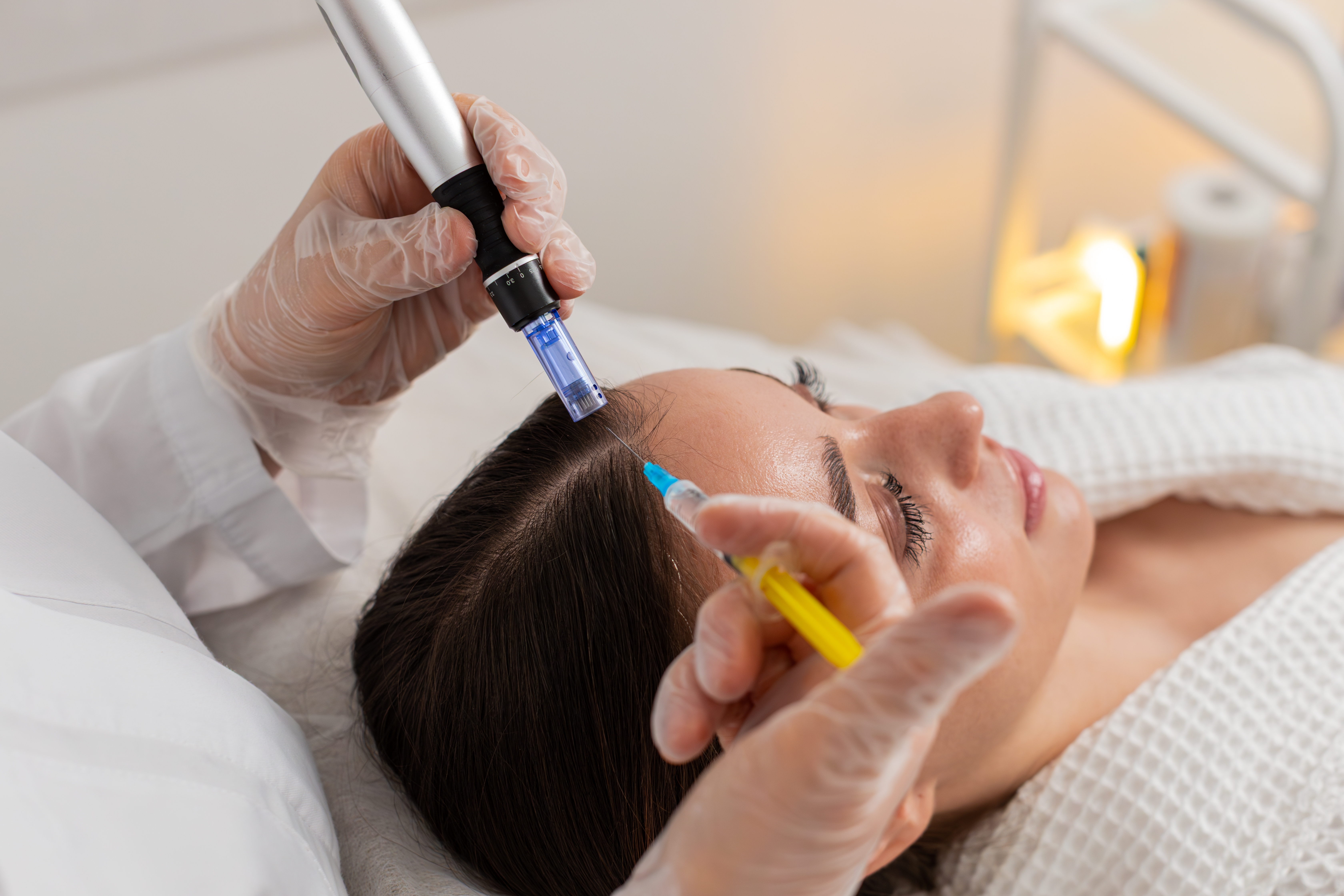
Microneedling is a skin treatment that creates thousands of tiny, controlled channels in the skin. These channels are too small to see once the skin settles. The body reads them as minor injuries and responds by producing new collagen and elastin. These two proteins keep skin firm, smooth, and springy.
Collagen production slows with age, sun exposure, and acne scarring. Microneedling gives that process a steady nudge. Over several weeks, many patients notice smoother texture, a more even tone, and a healthy glow.
The term “microneedling” covers more than one approach. The two main types are traditional microneedling and RF microneedling. They share the same starting point, but they work at different depths and with different strengths.
Traditional microneedling uses a pen-style device with very fine needles. The needles move in and out of the skin’s surface layers at a set depth. The tiny channels they create trigger the healing response that builds new collagen.
These channels also help skin absorb what is applied right after treatment. For this reason, our menu pairs traditional microneedling with other products. Patients can choose Microneedling Face + Neck on its own, Microneedling + PRX T33, or VAMP + Microneedling. Each pairing is chosen to support a specific skin goal, such as brightness, texture, or hydration.
Traditional microneedling works mainly in the upper layers of the skin. That makes it a strong fit for surface concerns and for patients who want gradual improvement with little interruption to their routine.
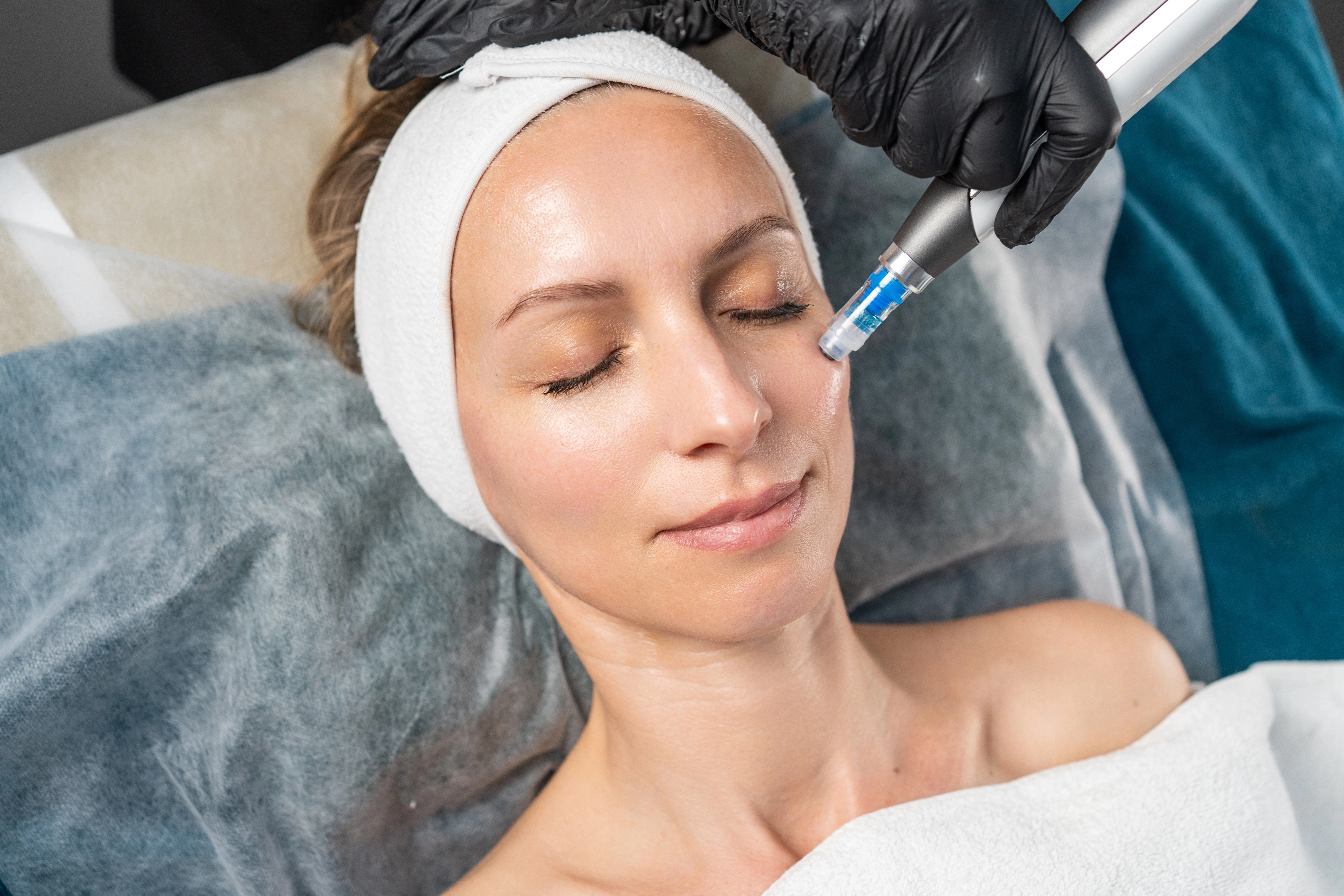
RF microneedling combines fine needles with radiofrequency energy. RF stands for radiofrequency, a form of energy that produces heat inside the skin. The needles carry that heat below the surface, where collagen and elastin are formed.
At ALURIA, we perform RF microneedling with the Candela Matrix Pro. We chose this device on purpose. We invest in well-established, medical-grade technology from Candela rather than lower-cost generic devices. Our goal is safe, consistent results that look natural.
RF microneedling works on two levels at once. The needles create micro-channels, just as traditional microneedling does. At the same time, radiofrequency energy heats the deeper tissue.
That gentle heat tightens existing collagen fibers and signals the skin to build new ones. Because the energy goes deeper than needling alone, the treatment can improve skin laxity, deeper scars, and textured areas on the body. The heat also contributes to a firming effect that continues to build over the following months.
Settings can be adjusted for different areas and skin concerns. The skin along the jawline needs different settings than the skin on the stomach or thighs. This flexibility lets our team shape each session to the patient in the chair.
We offer RF microneedling for the face, the face and neck, and the body.
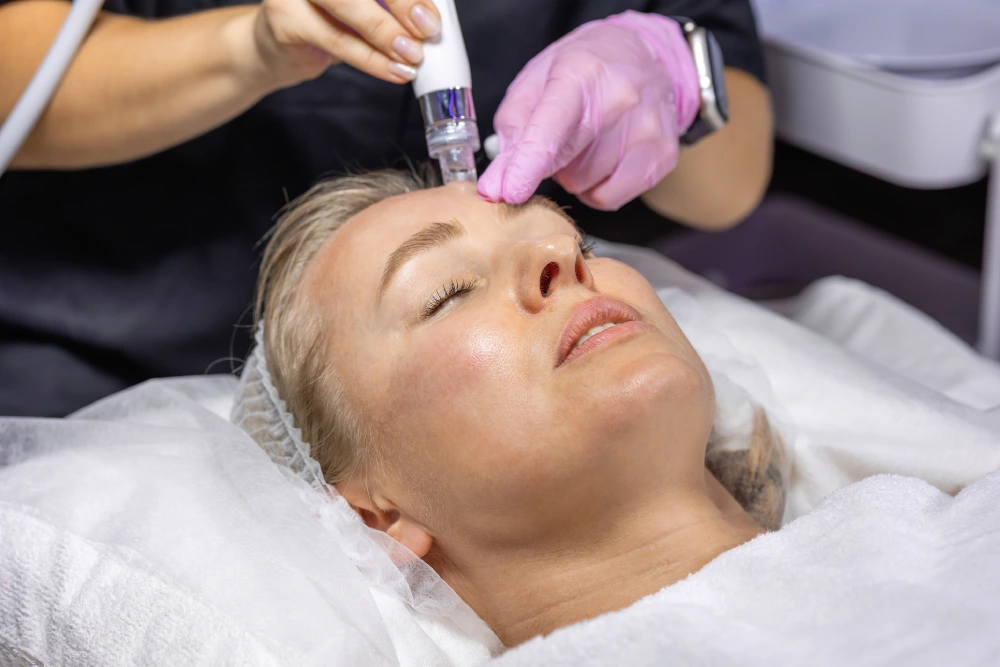
The two treatments look similar from the outside, but several factors set them apart.
Depth of treatment. Traditional microneedling works mostly in the upper layers of the skin. RF microneedling delivers heat deeper, where firmness and structure come from.
How collagen is stimulated. Traditional microneedling relies on the healing response alone. RF microneedling adds heat, which both tightens existing collagen and encourages new growth.
Treatment areas. We offer traditional microneedling for the face and neck. We offer RF microneedling for the face, the face and neck, and the body.
Product pairing. Traditional microneedling is often paired with a topical treatment such as PRX T33 or VAMP Polynucleotides. RF microneedling relies mainly on the energy itself to drive results.
Recovery. Traditional microneedling usually brings a day or two of pinkness. RF microneedling may bring a little more redness and swelling, and it often settles within a few days.
Ideal concerns. Traditional microneedling suits dullness, uneven texture, and fine lines. RF microneedling suits loose skin, deeper acne scars, and stretch marks.
RF microneedling offers several advantages for patients whose concerns go beyond the surface.
Visible firming. The added heat helps tighten skin, especially along the jawline, under the chin, and on the neck. Traditional microneedling improves texture but has less effect on laxity.
Deeper scar improvement. Rolling and boxcar acne scars sit below the surface. RF energy reaches these layers more directly, which can soften the look of scars that do not respond fully to needling alone.
Body treatment. RF microneedling can be used on the body, including areas with crepey skin or stretch marks. For patients focused only on stretch marks, we also offer Sublative RF, another radiofrequency treatment designed for skin resurfacing.
Results that keep building. Collagen remodeling continues for months after treatment. Many patients see their skin keep improving well after their final session.
Precision for different areas. Settings can be adjusted from one area to the next. This allows a single session to address several concerns at once.
Traditional microneedling still has clear strengths. It offers a lighter recovery, it pairs well with targeted products, and it is a good fit for younger patients focused on prevention and glow. RF microneedling is not “better” in every case. It is a stronger tool for a specific set of goals.
Matching the treatment to the concern is the most useful step in choosing between the two.
Traditional microneedling may be a good fit for:
Dull or tired-looking skin
Uneven texture and rough patches
Fine lines around the eyes and mouth
Enlarged-looking pores
Mild, shallow acne scarring
Patients who want a glow before an event with minimal downtime
RF microneedling may be a good fit for:
Mild to moderate skin laxity on the face and neck
Softening jawline definition
Deeper acne scars
Crepey skin on the body
Stretch marks
Wrinkles that have become more set over time
Many patients have concerns in both columns. Someone in their late twenties with dull skin and a few shallow scars may do well with traditional microneedling. Someone in their forties with loose skin under the chin may see more change from RF microneedling.
We start with a close look at your skin, including texture, pores, wrinkles, and pigmentation. It gives us and the patient a clear picture of where the skin stands and which treatment will make the most difference.
Both treatments begin with a numbing cream to keep the skin comfortable. Most patients describe the sensation as light pressure or a mild prickle. With RF microneedling, some patients also notice a feeling of warmth.
After traditional microneedling, skin often looks pink, similar to a mild sunburn. This usually fades within one to two days. Skin may feel tight or dry for a few days as it renews. Many patients return to their normal routine the next day.
After RF microneedling, redness and mild swelling are common and often last a few days. Some patients notice small, faint marks on the skin that fade as it heals. Because the treatment reaches deeper, the skin needs a little more time to settle.
Aftercare is similar for both:
Use a gentle cleanser and a simple moisturizer.
Avoid makeup for the period your provider advises.
Wear sunscreen daily and limit direct sun exposure.
Pause active ingredients such as retinoids and exfoliating acids until your skin has healed.
Skip heavy workouts, saunas, and hot tubs for a short time after treatment.
Results build gradually with both treatments. Most patients need a series of sessions spaced several weeks apart. Your provider will recommend a schedule based on your skin and goals.
A few simple questions can help you lean toward one treatment or the other.
What is your main goal? If you want brightness, glow, and smoother texture, traditional microneedling is often enough. If you want firmer skin or deeper scar improvement, RF microneedling is usually the stronger choice.
Where do you want treatment? Traditional microneedling at our office covers the face and neck. If you want to treat your stomach, arms, thighs, or another body area, RF microneedling is the option to consider.
How much downtime can you plan for? Traditional microneedling fits easily into a busy week. RF microneedling may call for a few quieter days.
Are you focused on prevention or correction? Patients in their mid-twenties to thirties often start with traditional microneedling to maintain healthy skin. Patients noticing more laxity often benefit from RF microneedling.
Do you want to pair your treatment with a targeted product? Traditional microneedling combines well with PRX T33 or VAMP Polynucleotides. These pairings let us fine-tune results for specific concerns.
Working through these questions answers “RF Microneedling vs. Traditional Microneedling: Which Should You Choose?” for most patients. Your skin may still surprise you, which is why a personal assessment matters.
Our team does not sell standard packages. Every treatment plan is built for the individual patient. Some patients start with one treatment and move to the other as their goals change. Others alternate between the two over the course of a year. If you would like to see every option side by side, our facial treatments page covers the full range we offer.
Traditional microneedling is a strong choice for brighter, smoother skin with a light recovery. RF microneedling, performed at ALURIA with the Candela Matrix Pro, reaches deeper to firm loose skin, soften deeper acne scars, and treat the body. The right choice depends on your concerns, the area you want treated, and the downtime you can plan for. Our providers use a personal assessment to match each patient with the treatment that fits their skin.