
Most tattoos need 5 to 12 laser sessions, spaced 6 to 8 weeks apart, to fade completely or nearly so. Small, black, older tattoos usually fall at the low end of that range. Large, colorful, densely inked or layered tattoos fall at the high end and sometimes go beyond it.
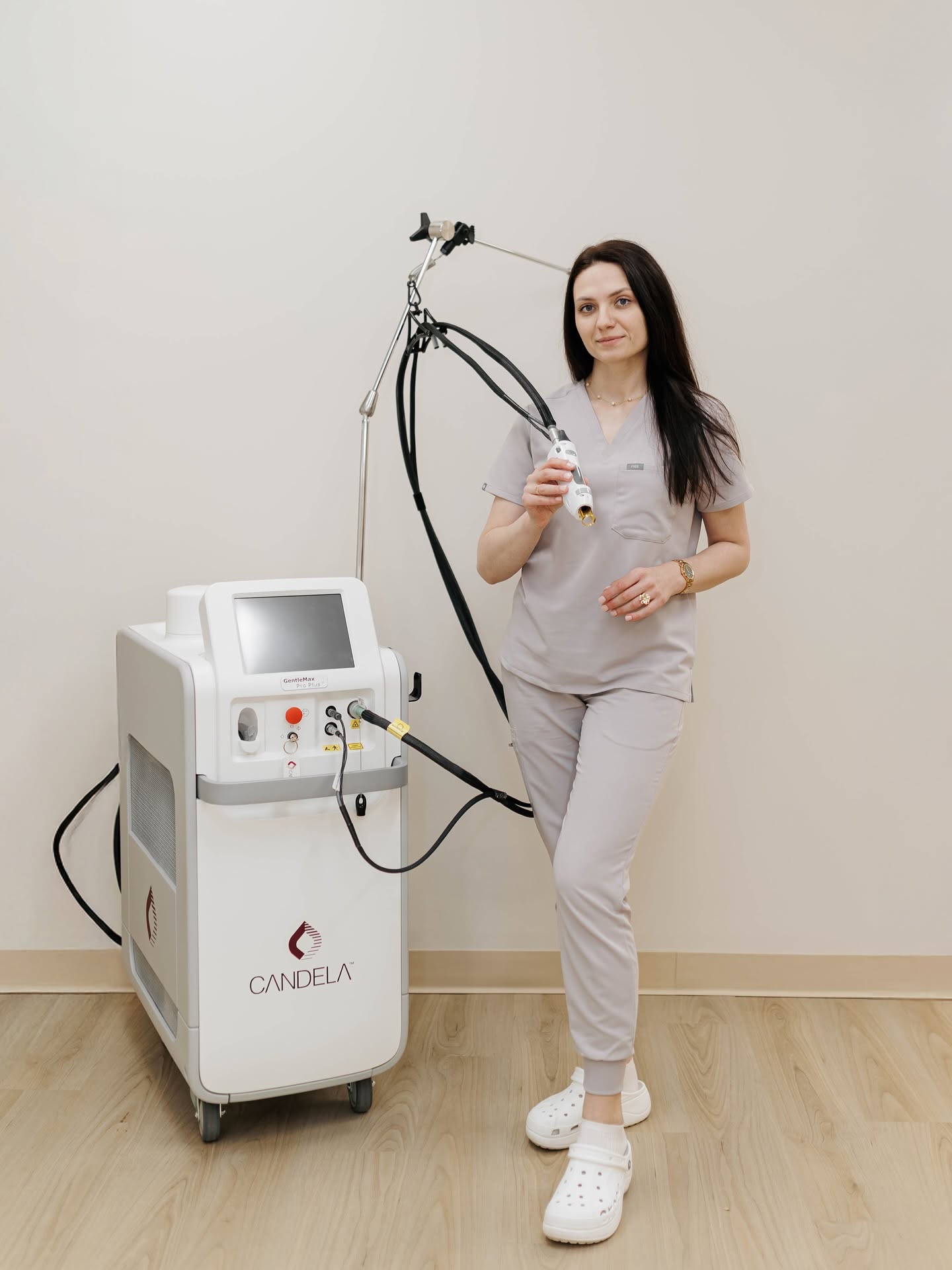
At ALURIA, we perform Tattoo Removal with the Candela PicoWay, a picosecond laser designed for tattoo removal. This guide answers “Laser Tattoo Removal: How Many Sessions Are Usually Needed?” in detail. It covers what raises or lowers the number, what fading looks like over time and how to plan your timeline.
Tattoo ink sits in the dermis, the layer of skin below the surface. The ink particles are too large for your body to clear on its own, so the tattoo stays put for years.
A tattoo removal laser sends short pulses of energy into the skin. The ink absorbs that energy and breaks into smaller fragments. Your immune system then carries those fragments away through the lymphatic system, and the tattoo fades.
The PicoWay delivers its energy in picosecond pulses, which are trillionths of a second long. Very short pulses shatter ink into finer particles than older, slower lasers can, which helps the body clear them more efficiently. The PicoWay also offers several wavelengths, so we can match the laser to the colors in your tattoo.
A professional tattoo holds a large amount of ink packed at several depths. One session can only break up part of it. The laser reaches the most accessible ink first, and deeper or denser ink waits for later sessions.
Your body also needs time to remove the fragments. Clearing happens over weeks, not days. Treating again before that clearing finishes adds little benefit and puts extra stress on the skin. The work happens in rounds: break up ink, let the body clear it, then treat what remains.
Most patients need 5 to 12 sessions. A small, single-color tattoo applied by an amateur may clear near the lower number. A large, multicolored professional tattoo usually needs more. Your provider can give you a personal estimate after examining the tattoo and your skin.
This range assumes sessions are spaced properly and the patient follows aftercare. Missed appointments and long gaps do not undo progress, but they stretch the overall timeline.
Full removal in three sessions is uncommon. It can happen with a very small, thin-lined, black tattoo that is many years old or was done by hand with little ink.
Three sessions are often enough for a different goal: lightening a tattoo before a cover-up. If you plan to get new artwork over the old design, the old ink only needs to fade enough that it will not show through. That target is usually reached well before full removal.
Permanent makeup is another case where fewer sessions may be enough. Our tattoo removal services include brow permanent removal, and brow pigment is often placed with less ink than a body tattoo.
There is no fixed upper limit on sessions. Some tattoos need 15 or more, especially large color pieces or cover-ups with several layers of ink.
At some point, a tattoo may stop changing much from session to session. Your provider will assess whether more treatment is likely to help. Some patients stop when the tattoo is faint enough that they are happy with the result, even if a trace remains. The goal is set together with you, and progress is reviewed at each visit.
Many providers use the Kirby-Desai scale to estimate session count. It scores a tattoo on six factors:
Skin type
Location on the body
Ink colors
Amount of ink
Scarring or changes in skin texture
Layering, such as a cover-up
Each factor gets a point value. The total score gives a rough estimate of the number of sessions. A higher score points to more sessions.
The scale was developed before picosecond lasers were widely used, so we treat it as a starting estimate rather than a fixed prediction. Your actual response to treatment is the most reliable guide, and we adjust the plan as the tattoo fades.
Black ink absorbs laser energy well, so it usually fades fastest. Dark blue and red also tend to respond well. Green, light blue and purple are often slower. Yellow, white, orange and pastel shades are usually the most stubborn, since they reflect much of the light rather than absorb it. A tattoo with many colors will often see its black areas fade first, while lighter colors need more sessions.
Dense shading and solid fill-ins hold far more ink than fine linework. Heavily saturated areas need more sessions to break down. Artists sometimes go over the same area more than once, which stacks ink at different depths. Each layer has to be cleared in turn.
A larger tattoo contains more total ink, and your body has more fragments to clear after each session. Large pieces usually need more sessions than small ones with similar colors and density.
Circulation plays a major role. Areas with strong blood flow and lymph drainage, such as the chest, neck, upper arms and upper back, usually fade faster. Areas farther from the heart, such as the hands, fingers, ankles and feet, tend to fade more slowly and may need extra sessions.
Older tattoos often clear faster. Over the years, your immune system has already broken down some of the ink, and the edges have softened. A tattoo that is only a year or two old still holds most of its original ink.
Skin with more natural pigment needs a careful approach, because the laser has to target the ink without affecting the surrounding skin tone. Providers often use more conservative settings on deeper skin tones. This can add sessions, but it protects the skin. The PicoWay’s range of wavelengths allows treatment across many skin types, and we plan settings around your skin.
The laser breaks up ink, but your body does the clearing. A healthy, well-functioning immune system clears fragments more efficiently. Smoking, poor sleep, chronic illness and high stress can all slow the process.
Professional tattoos are usually placed at an even depth with dense, saturated ink. Amateur or homemade tattoos typically hold less ink, so many fade in fewer sessions. Amateur ink can sit at uneven depths, though, which may leave some spots slower to clear than others.
A cover-up puts new ink on top of old ink. That doubles the material the laser has to break down and creates layers at different depths. Cover-ups almost always need more sessions than a single tattoo of the same size.
Every tattoo responds differently, but most follow a similar pattern. The stages below describe common changes, not guarantees.
Early sessions usually bring the most visible change. Black and dark areas lighten noticeably, and fine lines may start to blur. The tattoo is still clearly visible, but it looks softer and less sharp. Many patients find this stage encouraging.
The tattoo continues to lighten, though the change from each session is often smaller than in the early visits. Lines may look broken up or patchy. Colors that resist treatment, such as green or light blue, may stand out more as the black fades around them.
Many tattoos look faint at this point, sometimes described as a “ghost” of the original design. For small or simple tattoos, this may be near the finish line. Larger and more colorful pieces still have stubborn areas to work on.
Later sessions focus on the remaining traces, usually the most resistant colors or the densest spots. Progress at this stage is gradual. Your provider will review how much change each session brings and help you decide when the result meets your goal.
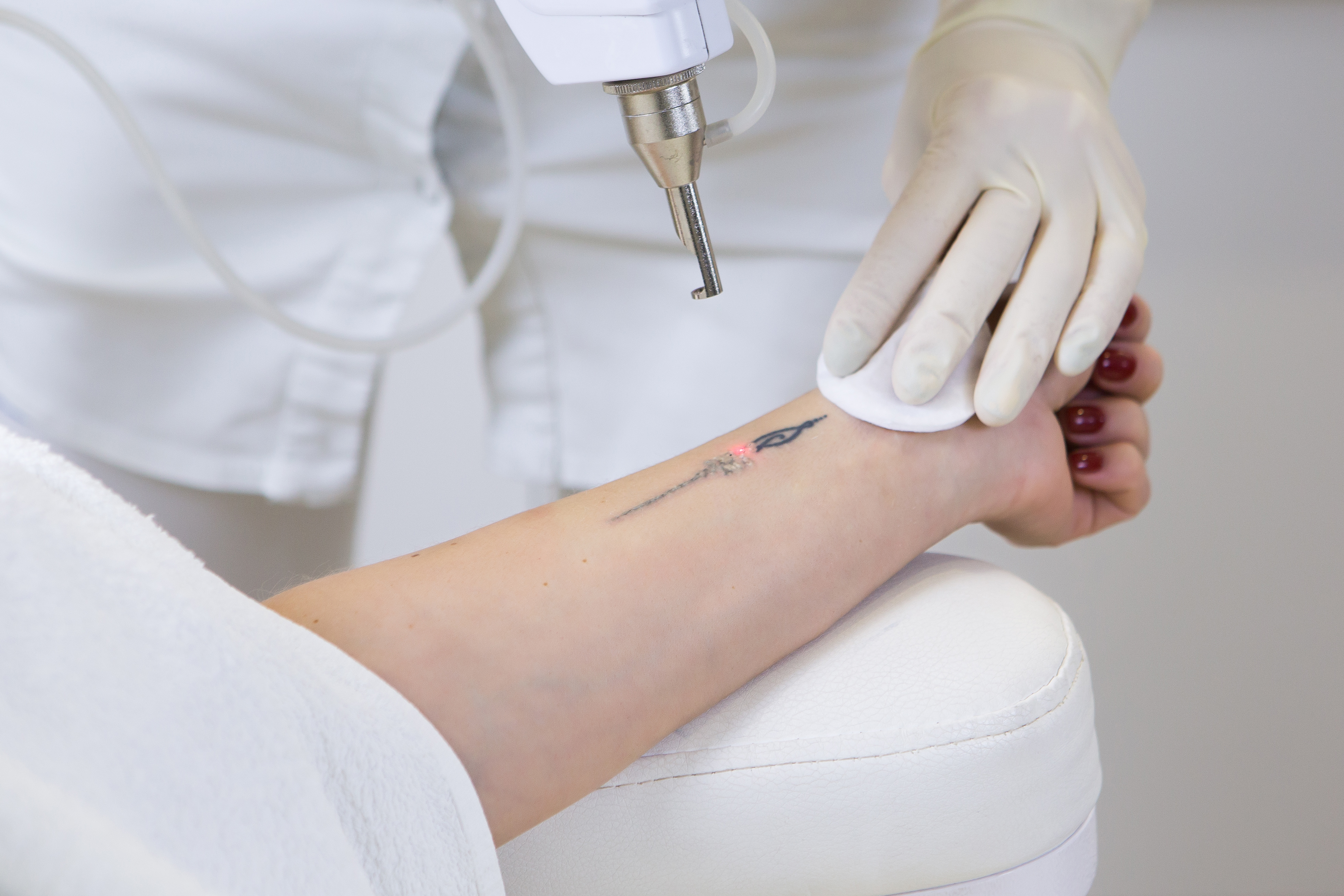
The following is an illustrative example, not a specific patient. Picture a palm-sized black script tattoo on the upper arm, done professionally about eight years ago.
The upper arm has good circulation, the ink is all black and the tattoo has had years to soften. Those factors point toward the lower to middle part of the range. A plan for this tattoo might estimate 6 to 8 sessions. With visits about every 8 weeks, the full process would take roughly a year to a year and a half.
Change the same tattoo to a full-color design on the ankle, and the estimate rises. Slower color clearing and lower circulation could push the plan past 10 sessions. This is why we build each plan around the actual tattoo rather than a standard package.
After each session, your skin needs time to heal and your lymphatic system needs time to carry away the broken-down ink. Most of that clearing happens over the weeks after treatment. A gap of 6 to 8 weeks gives both processes time to work.
Some tattoos benefit from even longer gaps, especially later in treatment or on areas with slower circulation. Treating too soon does not speed results and can irritate the skin. Your provider will set the spacing that suits your skin and your tattoo.
Tattoo removal is a long process. Ten sessions spaced 8 weeks apart take more than a year and a half. Patients who keep a steady schedule usually reach their goal sooner than those who take long breaks.
Planning ahead helps. If you have an event, a new tattoo planned over the area or a season when you expect sun exposure, share that with your provider early. Your schedule can be built around it.
You cannot rush your immune system, but you can help it work well. These habits support steady progress:
Do not smoke. Smoking reduces circulation and slows ink clearing.
Stay active. Regular exercise supports blood flow and lymph drainage.
Drink enough water. Good hydration supports overall skin health.
Protect the area from the sun. Tanned skin can complicate treatment, so cover the tattoo or use sunscreen between sessions.
Follow aftercare instructions. Well-healed skin is ready for the next session on schedule.
Keep your appointments. Steady spacing keeps the process moving.
Get enough sleep and manage stress. Both support normal immune function.
No cream or supplement replaces laser treatment. These steps simply give your body the conditions it needs to clear ink efficiently.
Yes, cover-ups usually take longer. Two tattoos are stacked in the same spot, often with dense ink in both layers. The laser must break down the top layer and the one beneath it. Expect a cover-up to sit toward the higher end of the session range or above it.
If your goal is to lighten a tattoo for a new cover-up, the process is shorter. The old design only needs to fade enough for the tattoo artist to work over it cleanly.
Size affects both. A larger tattoo holds more ink, so your body has more fragments to clear after each session. That often means more sessions overall.
Size also affects how long each visit takes. A small wrist tattoo may be treated in minutes, while a full sleeve or back piece takes considerably longer. Our tattoo removal services are organized by size, from very small tattoos up to full sleeves and backs, so your plan reflects the scale of the work.
Session estimates are educated guesses. Some tattoos clear faster than expected and some need extra visits. A plan with an unlimited session structure removes the pressure to stop early because a set number of visits has run out.
That structure suits patients who want full removal rather than lightening. It also suits tattoos with stubborn colors, cover-ups and locations with slower circulation. Ask your provider how your plan is set up so you know what to expect from start to finish.
During a consultation at our Rolling Meadows office, your provider examines the tattoo’s size, colors, depth, age and location, along with your skin type. You leave with a realistic session estimate, a suggested spacing schedule and a clear picture of what fading will look like over time. Consultations are available in English, Ukrainian, Russian and Polish.
The same Candela PicoWay laser is also used for our Eyebrow Tattoo / PMU Removal, and you can learn more about our full range of services on the Home.
For anyone asking “Laser Tattoo Removal: How Many Sessions Are Usually Needed?”, the usual answer is 5 to 12 sessions, spaced 6 to 8 weeks apart. Ink color, density, size, location, age, skin type and immune health all shift that number. Cover-ups and colorful tattoos take longer, while small, black, older tattoos clear faster. A consistent schedule and healthy habits support steady fading, and a plan built around your specific tattoo gives you the most realistic timeline.